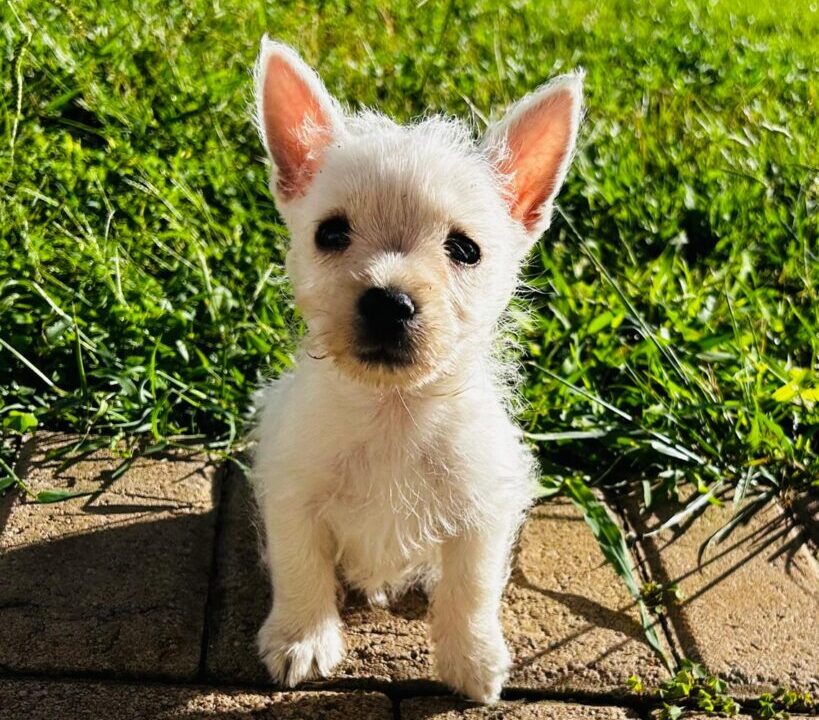
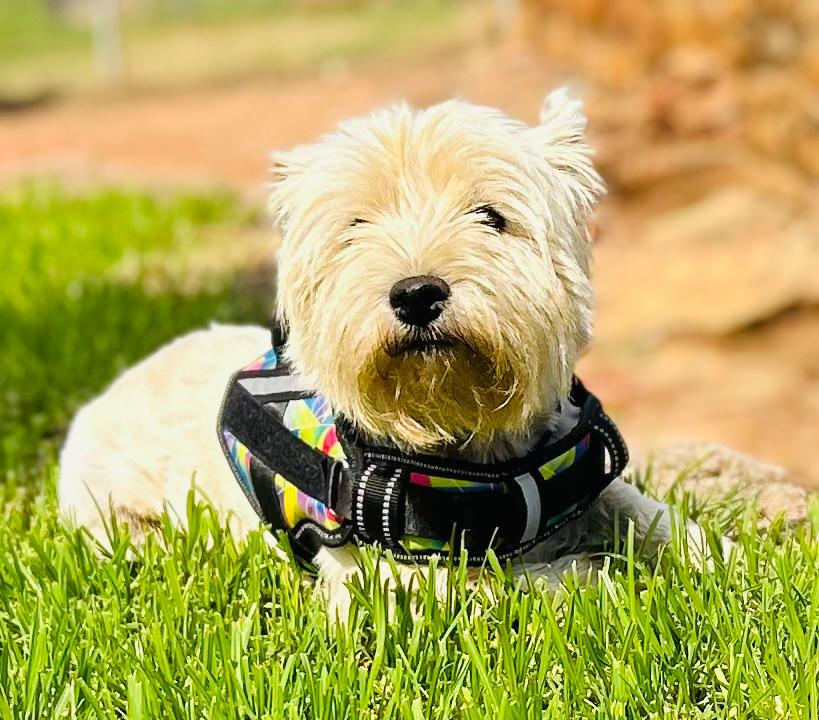
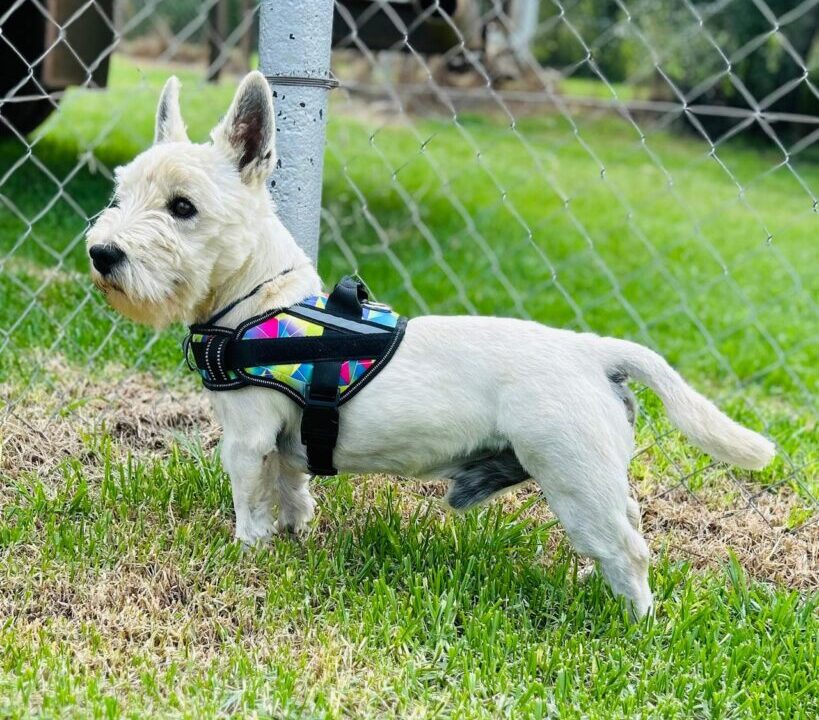
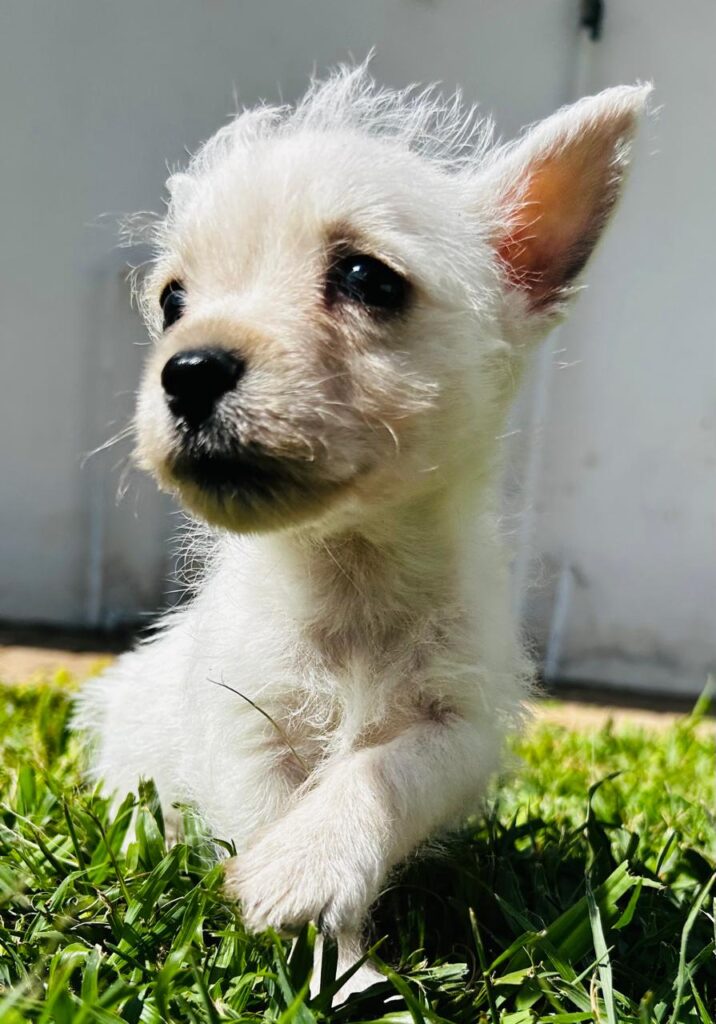
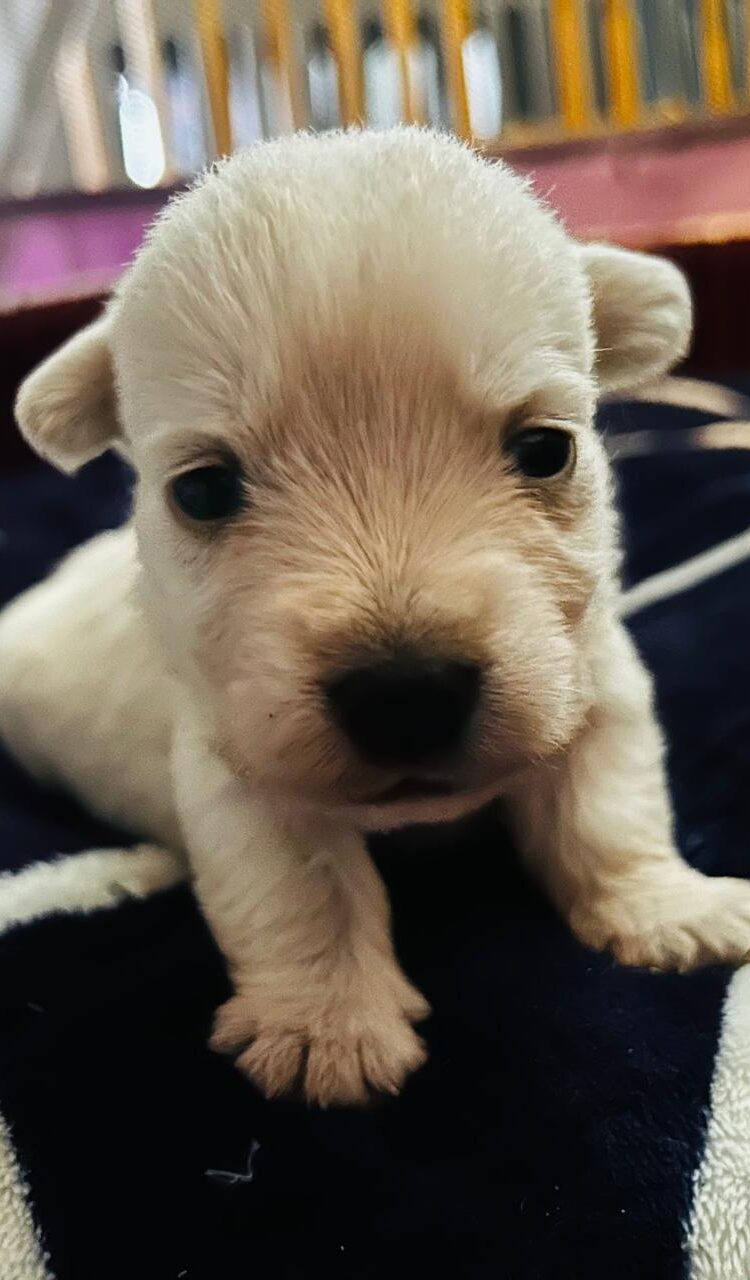
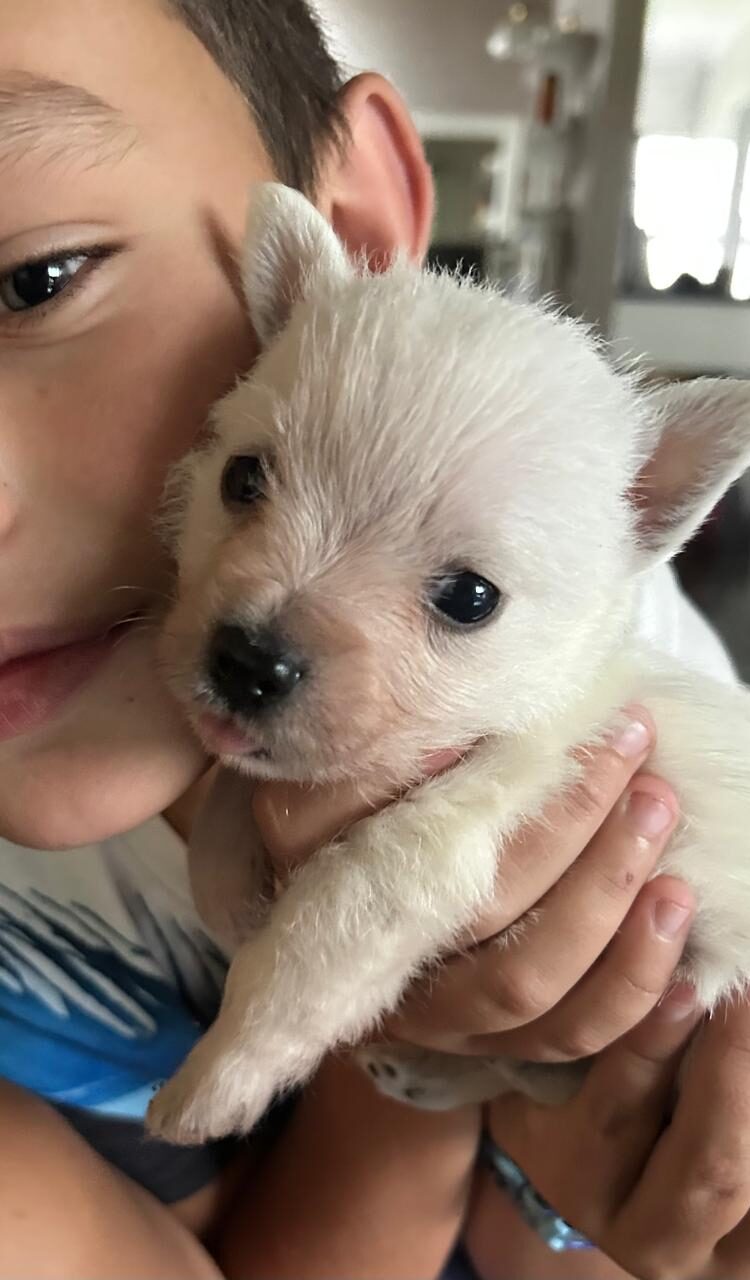
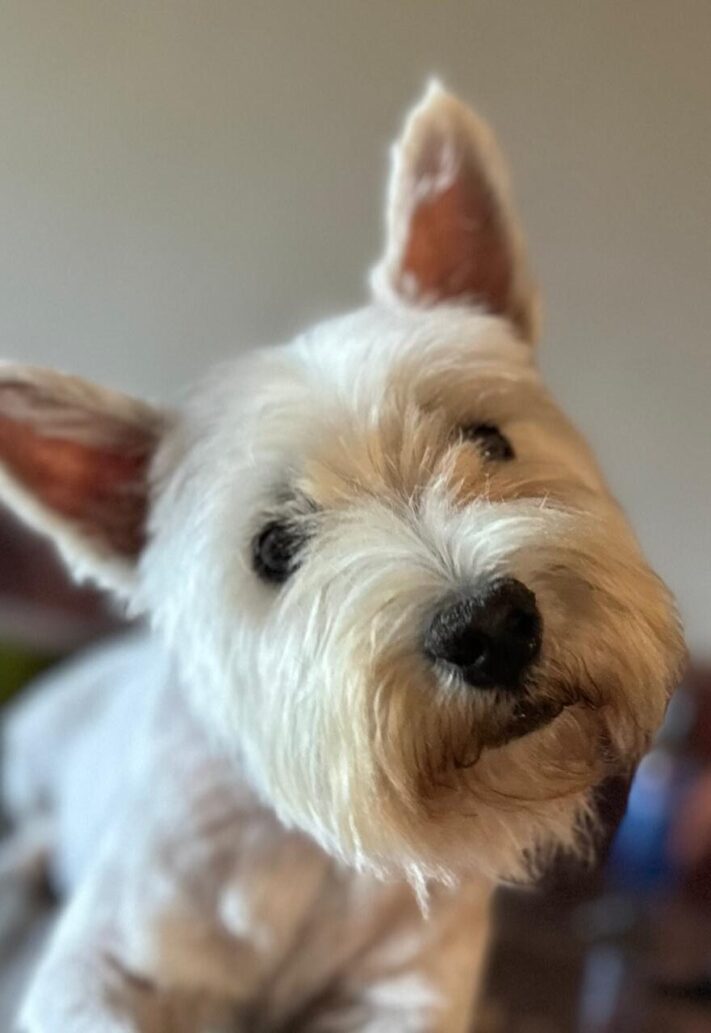
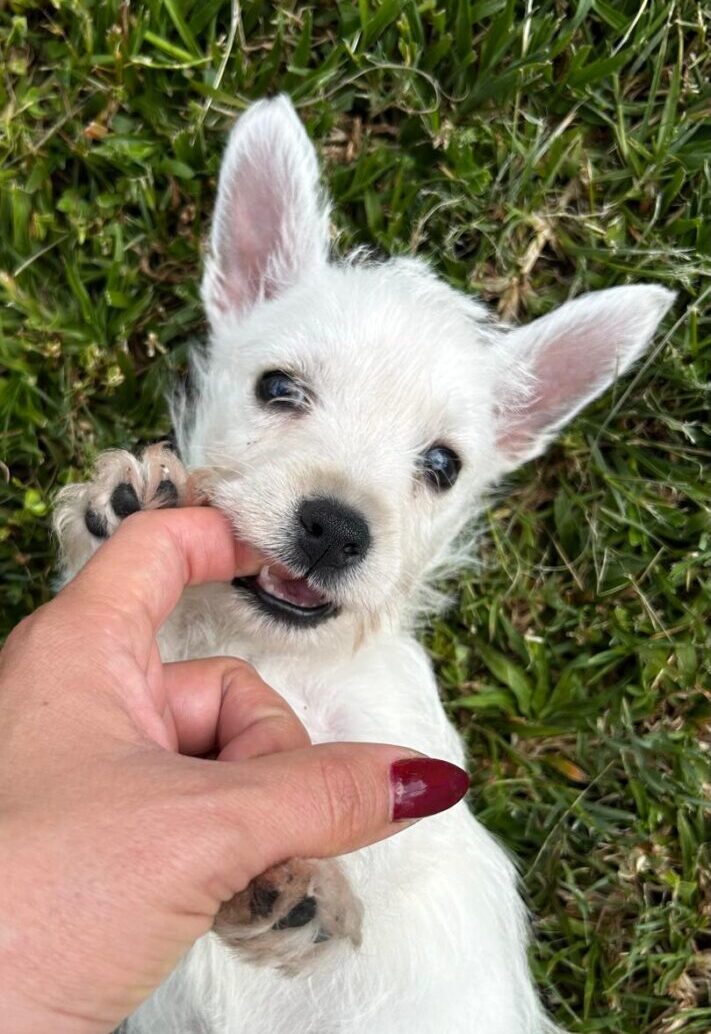
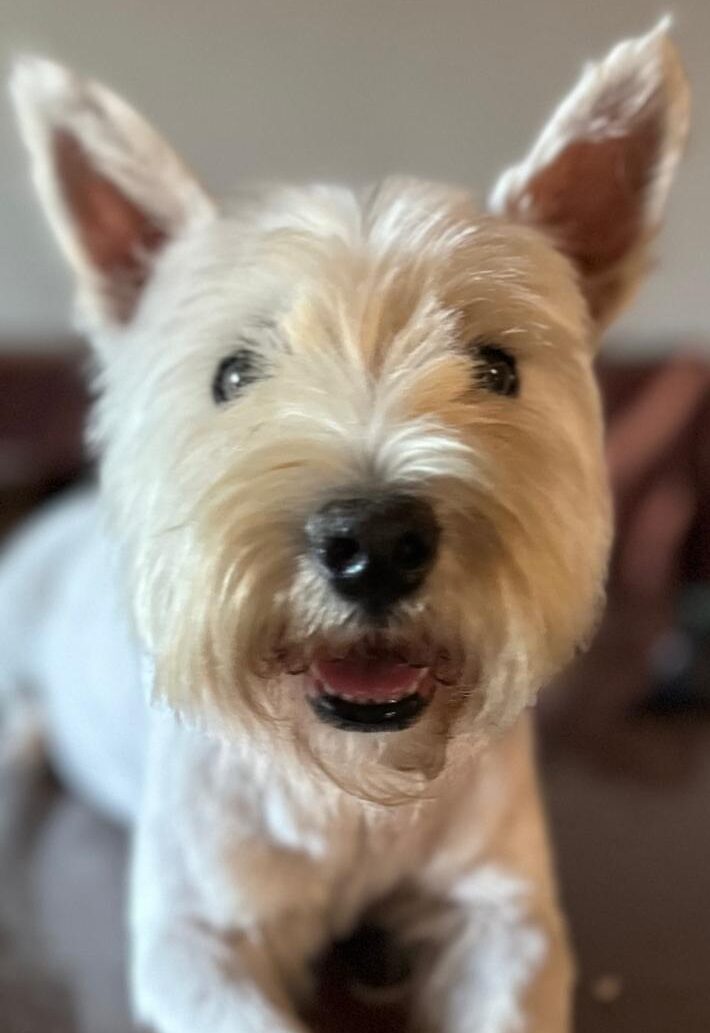
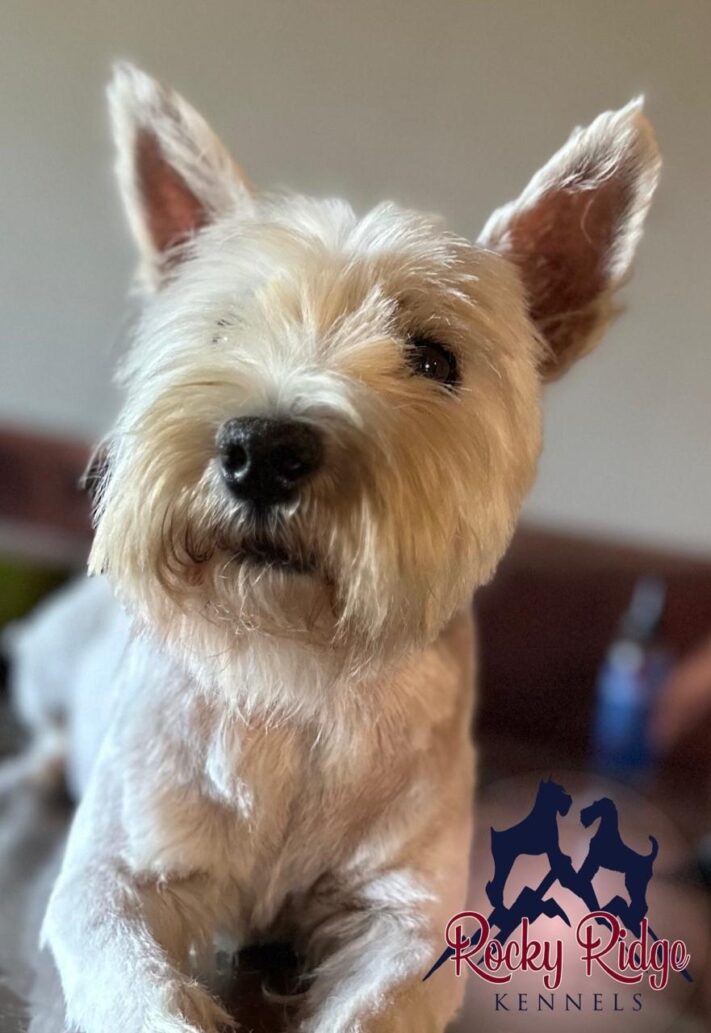
HEAD: Skull slightly domed; when handled across forehead, presents a smooth contour. Tapering very slightly from skull at level of ears to eyes. Distance from occiput to eyes, slightly greater than length of foreface. Head thickly coated with hair, and carried at right angle, or less, to axis of neck. Head not to be carried in extended position. Foreface gradually tapering from eye to muzzle. Distinct stop, formed by heavy, bony ridges immediately above and slightly overhanging eye, and slight indentation between eyes. Foreface not dished or falling away quickly below eyes, where it is well made up. Jaws strong and level. Nose black and fairly large, forming smooth contour with rest of muzzle. Nose not projecting forward.
Eyes: Set wide apart, medium in size, not full, as dark as possible and set well under heavy eyebrows, which gives the dog a sharp and intelligent piercing expression. Light-coloured eyes undesirable.
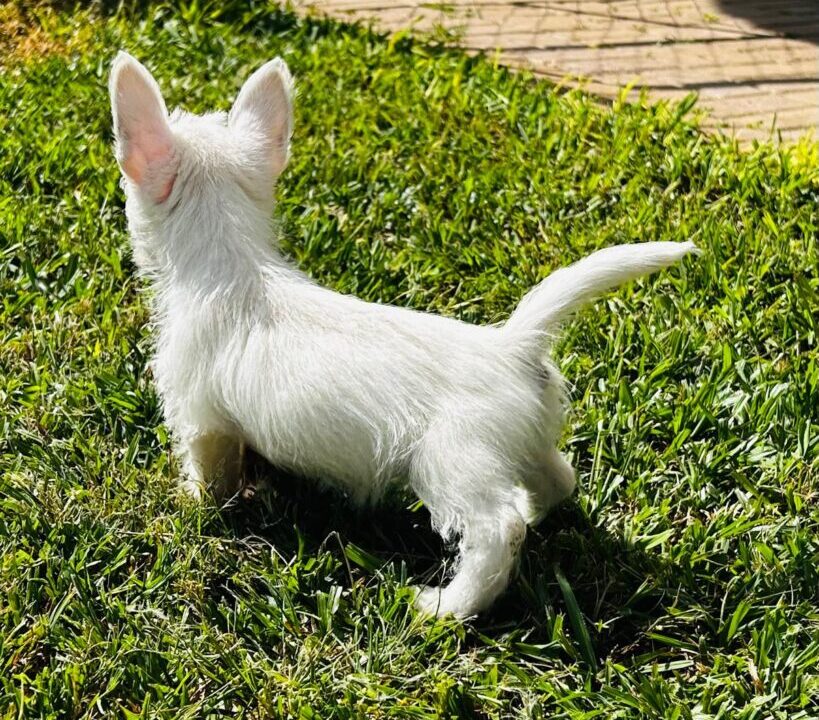
Ears: Small, erect, and carried firmly; terminating in sharp point; set neither too wide nor too close. Hair short and smooth (velvety), should not be cut. Free from any fringe at top. Round-pointed, broad, large, or thick ears, or too heavily coated with hair undesirable.
Mouth: As broad between canine teeth as is consistent with varminty expression required. Teeth large for size of dog, with regular scissor bite, i.e. upper teeth closely overlapping lower teeth and set square to the jaws.
NECK: Sufficiently long to allow proper set-on of head required, muscular, and gradually thickening towards base, allowing neck to merge into nicely sloping shoulders.
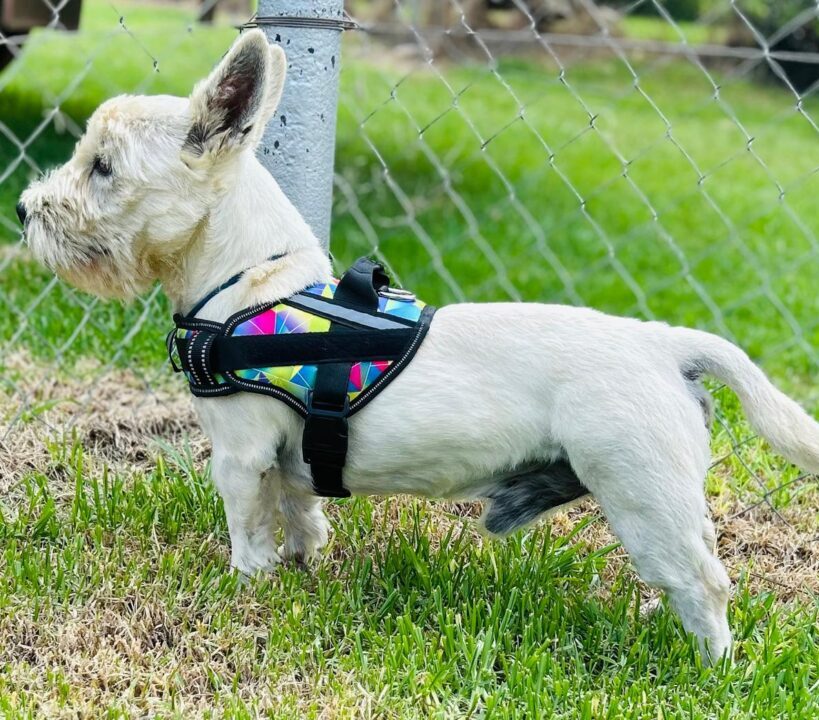
FOREQUARTERS: Shoulders sloping backwards. Shoulder blades broad and lying close to chest wall. Shoulder joint placed forward, elbows well in, allowing foreleg to move freely, parallel to axis of body. Forelegs short and muscular, straight, and thickly covered with short, hard hair.
BODY: Compact. Back level, loins broad and strong. Chest deep and ribs well-arched in upper half, presenting a flattish side appearance. Back ribs of considerable depth and distance from last rib of quarters as short as compatible with free movement of body.
HINDQUARTERS: Strong, muscular, and wide across top. Legs short, muscular, and sinewy. Thighs very muscular and not too wide apart. Hocks bent and well set in under body so as to be fairly close to each other when standing or moving. Straight or weak hocks highly undesirable.
FEET: Forefeet larger than hind, round, proportionate in size, strong, thickly padded, and covered with short, harsh hair. Hind feet are smaller and thickly padded. Under-surface of pads, and all nails, preferably black.
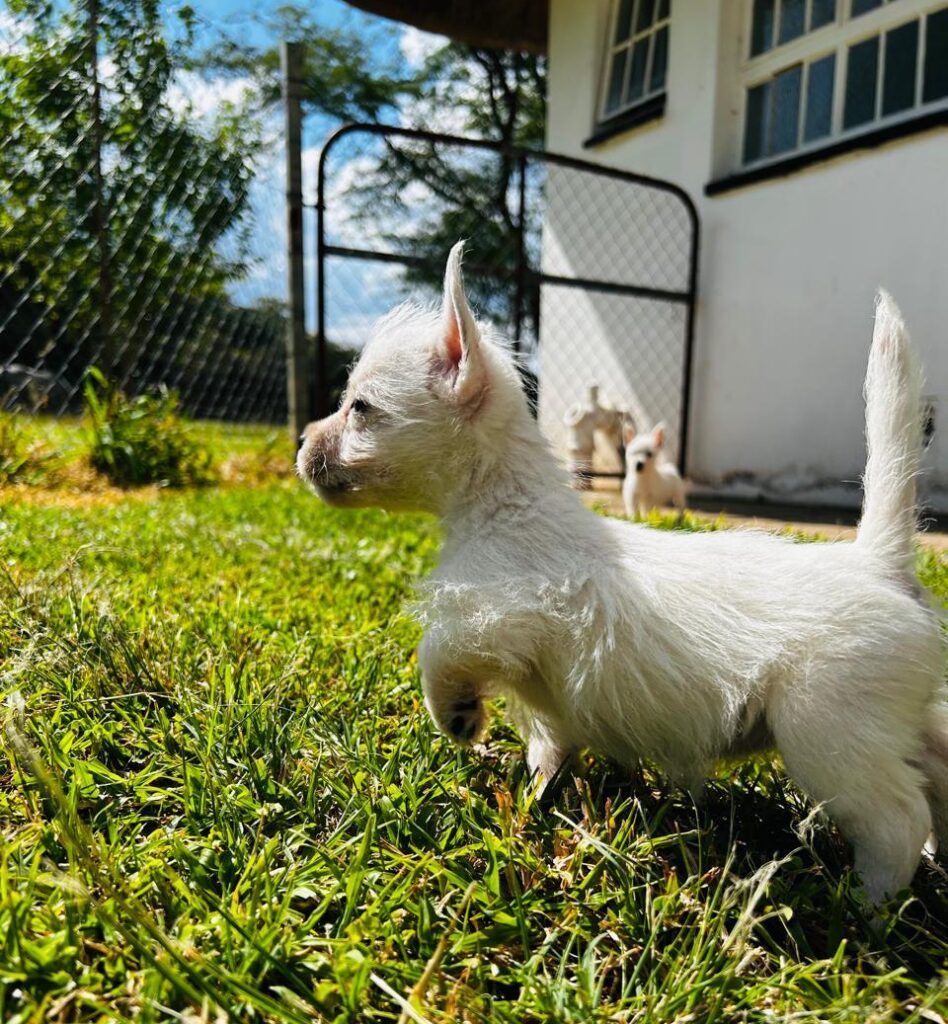
TAIL: 13cm – 15cm (approx. 5” – 6”) long, covered with harsh hair, no feathering, as straight as possible, carried jauntily, not gay or carried over back. A long tail undesirable, and on no account should tails be docked.
GAIT / MOVEMENT: Free, straight, and easy all-round gait. In front, legs freely extended forward from shoulder. Hind movement free, strong and close. Stifle and hocks well-flexed and hocks drawn under body giving drive. Stiff, stilted movement behind and cow-hocks highly undesirable.